The dashboard was clear. Activation dropped for trial admins after connector setup.
Then the room got fuzzy. Data owned the chart. Product owned the metric. Design owned the empty state. Engineering owned the release. Growth owned the number. Somehow nobody owned the next product response.
Short answer: product analytics ownership means every important signal has four named owners: the signal owner, surface owner, response owner, and guardrail owner. If one is missing, the insight will probably become a meeting note instead of a product change.
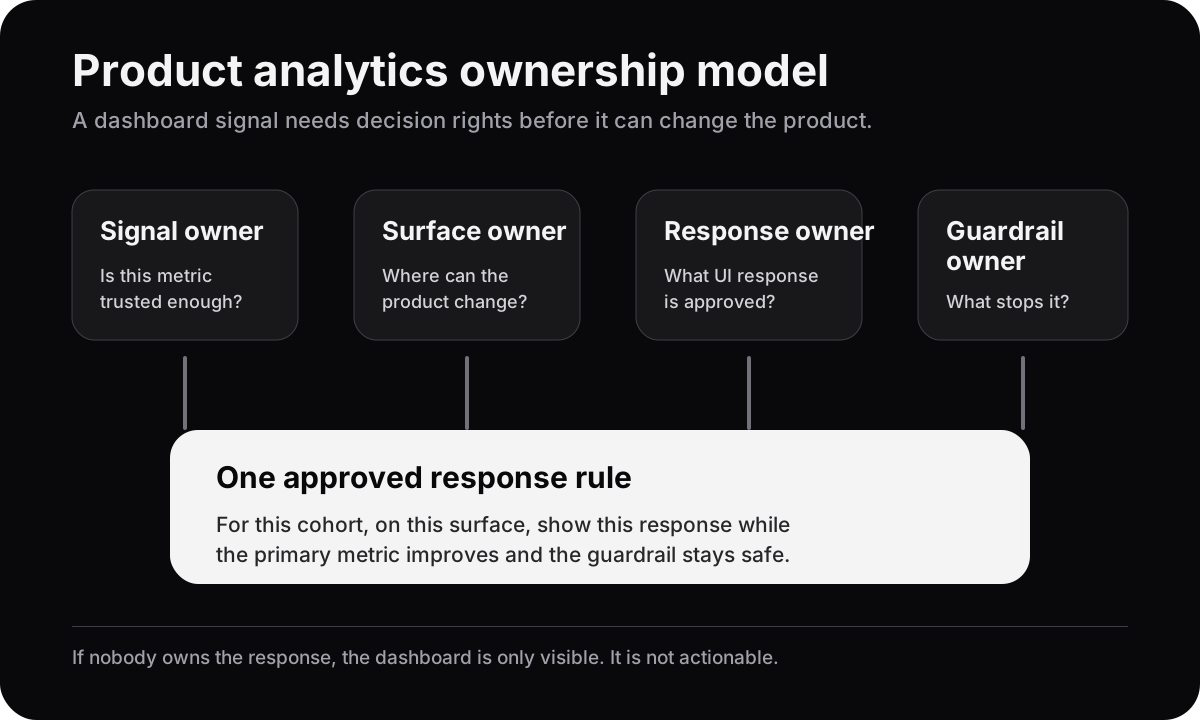
The metric can have many stakeholders. The response needs one accountable owner.
Ownership is more than access to dashboards
Self-serve analytics helps, but it does not decide who acts. Amplitude’s product analytics guide argues teams should not wait on another team or a ticket request to answer basic behavior questions. That solves the access problem.
The ownership problem is different.
A PM can see the funnel. An analyst can explain the segment. An engineer can confirm the event. None of that names who is allowed to change the product surface when the signal moves.
That is why tracking plans need owners. Amplitude’s tracking-plan ownership piece makes the practical point: if everyone owns the tracking plan, nobody is accountable for keeping it accurate and useful. The same thing happens one layer later with product responses.
The four owners to name
For any signal worth acting on, write one ownership row:
| Owner | What they decide |
|---|---|
| Signal owner | Whether the event, cohort, or metric is trustworthy enough to use |
| Surface owner | Which page, step, component, or state can change |
| Response owner | Which UI response is approved, paused, or removed |
| Guardrail owner | Which safety metric can stop the response |
This is not bureaucracy. It is a way to keep analytics from becoming a shared shrug.
Say integration_connected is trusted, but saved-report creation is weak after 24 hours. The response owner should be able to approve one narrow change: show an integration-specific report template in the dashboard empty state. The guardrail owner can stop it if setup exits or support tickets rise.
Now the signal has a path.
A metric owner is not always the response owner
Mixpanel’s writing on Metric Trees frames ownership around accountability for metrics: monitoring performance, interpreting changes, and taking action. That is useful, especially when metrics connect to a North Star.
But the person who owns a metric may not own the surface that needs to change.
A growth lead might own activation rate. A product designer might own onboarding empty states. An integrations engineer might own connector setup. If activation drops inside connector setup, the response has to cross those boundaries without turning into a handoff maze.
So do not stop at “owner: growth.” Write the exact decision rights:
| Signal | Surface | Response owner | Guardrail |
|---|---|---|---|
| Trial admin connected integration, no saved report in 24 hours | Dashboard empty state | Growth PM | No rise in exits or tickets |
| Invited teammate never accepts | Invite page and email state | Activation PM | No drop in teammate activation |
| Power user opens feature once, never repeats | Feature home state | Feature PM | No rise in dismissals |
The table is small because the decision should be small.
Start with one response, not an org redesign
Mixpanel’s product analytics practice guide recommends starting with one team and one practical use case before expanding. Good advice. Ownership models fail when they begin as a reorg.
Pick one weekly product review metric. Add the four owners. Choose one allowed response and one guardrail. Review it after a fixed exposure window.
This pairs well with dashboard response maps and tracking plans that end in product rules. Those posts define the fields. This one names the people who can say yes, no, pause, or rollback.
Where Rayform fits
Rayform sits after the analytics stack and before the product response. PostHog, Amplitude, Mixpanel, Segment, or the warehouse can remain the source of truth for behavior. Rayform uses trusted behavioral signals to adapt the UI at runtime inside approved rules.
That only works if ownership is explicit. The product should not change just because a dashboard moved. It should change because a response owner approved the surface, the guardrail owner accepted the safety rule, and the team knows when to review the result.
Try this today: pick one metric from your product analytics dashboard and write the four-owner row. If nobody owns the response, you do not have an actionable insight yet. You have a chart waiting for a meeting.
See how Rayform turns behavioral signals into runtime UI changes.