A support ticket is not just a support problem.
It is a user saying, usually after several failed attempts, “The product did not help me finish the job.” That makes tickets useful product analytics signal. Not because every complaint deserves a roadmap slot, but because repeated ticket themes often point to product behavior the interface should have handled earlier.
Amplitude makes the case directly: support conversations give product teams immediate feedback and complement behavioral analytics. Pendo says support ticket themes can reveal friction areas when you cross-check them against feature usage. Mixpanel has written about visualizing support experience inside product analytics so product teams can see ticket volume and feedback trends.
The pattern is clear. Support knows where users hurt. Product analytics knows which users hit the surface. The hard part is joining the two before the next batch of tickets arrives.
The ticket is late evidence
By the time a user opens a ticket, the product has usually missed earlier signals:
- They opened the same help doc three times.
- They retried a workflow and exited before success.
- They hit a validation error, changed one field, and hit it again.
- They rage-clicked a disabled button.
- They asked support to explain a step the UI should have explained.
The ticket is still valuable. It gives language, urgency, and context. But it is late. If the team only reviews tickets in weekly product meetings, the fix becomes a summary, then a ticket, then maybe a sprint item.
The better question is: what behavior happened before the ticket?
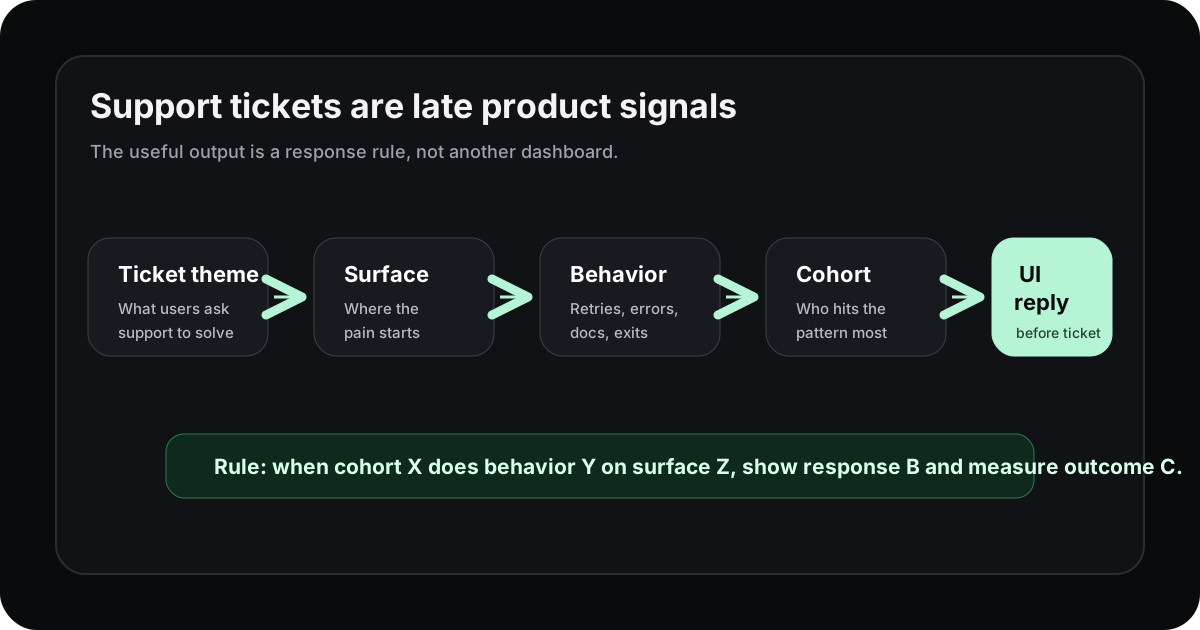
Tickets explain the pain. Behavioral telemetry tells you who else is approaching it.
Do not turn support into another dashboard
A “top ticket themes” chart is useful for prioritization. It is not the fix.
Say support gets 18 tickets in a week about CSV import. The weak version says, “CSV import is confusing.” The better version says:
“Trial admins on workspaces under seven days old map two required fields, hit the import error, open the CSV docs, retry once, and then create a support ticket.”
That sentence has a surface, a cohort, a behavior sequence, and a moment where the product can respond. Maybe the right response is a sample CSV, a stricter field preview, a smaller first import, or a clearer error state. Maybe it is a real bug. Either way, the ticket theme becomes a product rule instead of a meeting note.
What to attach to every recurring ticket theme
When a theme repeats, add five fields before debating the roadmap:
| Field | What it answers |
|---|---|
| Surface | Where in the product did the pain start? |
| Cohort | Which users/accounts hit it most? |
| Pre-ticket behavior | What did they do before asking for help? |
| Response | What should the UI show before the next ticket? |
| Outcome | Which event proves the response worked? |
For a billing ticket, the outcome might be successful plan change without support. For onboarding, it might be first live report created. For a permissions issue, it might be invited teammate accepts and completes the blocked action.
This keeps support themes grounded. A loud enterprise customer and a small self-serve user can report the same issue, but they may need different responses.
Where Rayform fits
Rayform is built for this handoff. It reads behavioral telemetry from stacks like PostHog, Segment, Amplitude, and Mixpanel, then adapts the UI at runtime for the cohort showing the pattern.
Support might reveal that admins keep asking why import failed. Product analytics can show which admins hit the failure pattern before they file a ticket. Rayform handles the next step: change the empty state, show a sample file, delay the advanced import prompt, or route the user to a smaller first action.
Support still helps the user in front of them. The product helps the next user before they need support.
Try this this week
Pick one recurring support theme from the last 14 days. Do not start with the ticket count.
Start with the sentence:
“Users in cohort X do behavior Y on surface Z, then ask support for A. Show response B before the ticket and measure outcome C.”
If you cannot fill in Y or Z, the next step is better instrumentation. If you cannot fill in B, the problem is not support volume. It is an unresolved product decision.
See how Rayform turns behavioral signals into runtime UI changes.