A feature flag can feel temporary right up until everyone is afraid to delete it.
The rollout hit 100%. The experiment ended. The dashboard looked fine. Then the team moved on, and the flag became a quiet branch in the product. Six months later, nobody remembers whether turning it off breaks checkout, hides a beta feature, or reverts a workflow some customer still uses.
Short answer: feature flag cleanup is not just code hygiene. Every flag should ship with an owner, flag type, expiry, success metric, guardrail, cleanup action, and rollback path.
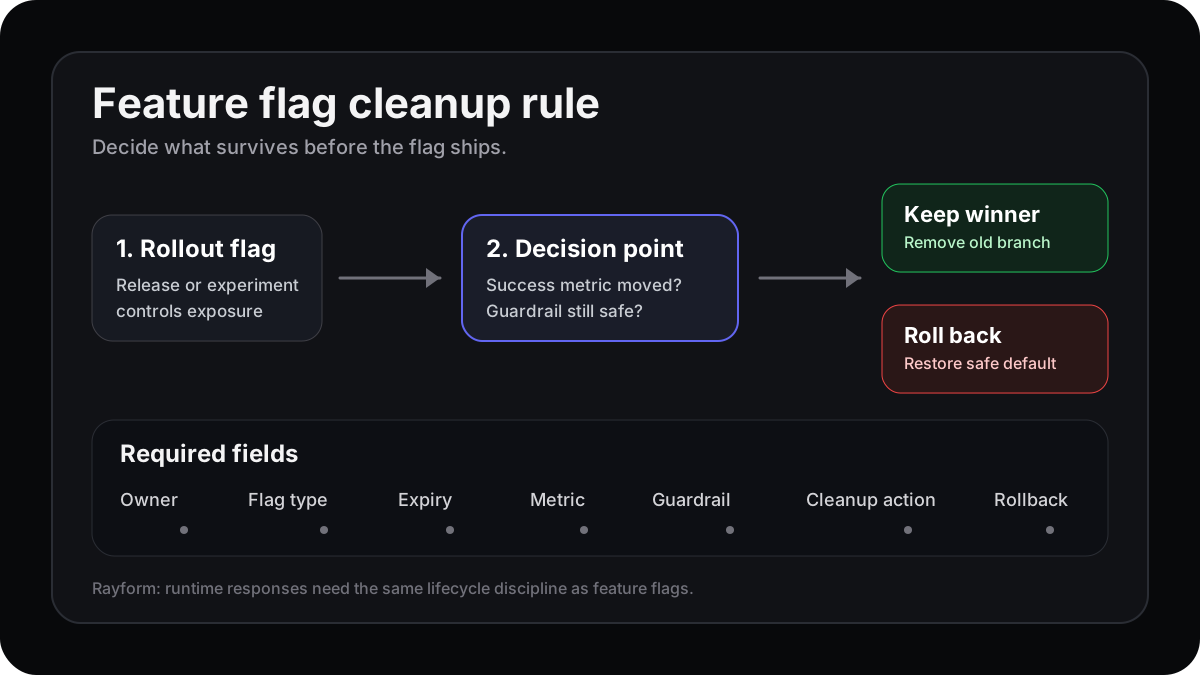
The flag controls rollout. The cleanup rule decides what survives after the decision.
Stale flags become hidden product logic
LaunchDarkly’s technical-debt guide separates temporary flags from permanent ones. Release and experiment flags should usually leave the codebase after they have served their purpose. Ops, entitlement, and circuit-breaker flags may stay longer because they are part of the product’s operating model.
That distinction matters. A temporary flag that reached full rollout is often not temporary anymore. It is an undocumented product rule.
PostHog’s stale-flag guidance makes the risk practical: a 100% rollout does not mean you should disable the flag first. If the code still checks the flag, disabling it can turn the feature off for everyone. The safer order is remove code references, deploy, then disable or archive the flag.
So the cleanup question is not “Can engineering delete this?” It is “Which product behavior should remain?”
Write the cleanup rule before launch
Use a small rule, not a cleanup spreadsheet nobody opens:
| Field | Example |
|---|---|
| Owner | Growth PM plus checkout engineer |
| Flag type | Experiment flag, short-lived |
| Expiry | Review 14 days after full rollout |
| Success metric | More trial workspaces complete setup |
| Guardrail | No increase in setup exits or support tickets |
| Cleanup action | Keep winning path, remove losing branch, archive flag |
| Rollback | Restore default path if guardrail fails within 48 hours |
That rule does two useful things. It gives engineering permission to remove dead branches. It also forces product to choose whether the flag is a temporary launch control or a durable product rule.
Statsig makes the same accountability point from the code side: flags get messy when no one owns cleanup after rollout. Unleash and DevCycle both treat lifecycle state as a first-class concern, using stale, potentially stale, completed, or archived states to keep flags from drifting forever.
The tools can surface the problem. The team still has to make the product decision.
Do not confuse cleanup with deletion
Some flags should disappear. Some should become product rules.
A release flag that shipped a new settings page probably should be removed once the new path is stable. An experiment flag should usually keep the winning variant and remove the other branches after the decision window closes. But an entitlement rule, emergency kill switch, or cohort-specific product response may need to stay, with clear ownership and guardrails.
The mistake is treating every long-lived flag as technical debt or every stale flag as harmless. Both are wrong.
A flag that routes enterprise admins differently from trial users may be real product logic. Keep it if it is intentional. Name the owner, metric, guardrail, and review date. If no one can write those fields, it is probably debt.
Where Rayform fits
Rayform sits after the team trusts the behavioral signal. Feature flags can keep doing release control, experiments, permissions, and emergency shutoffs. Rayform is for the response layer: when a known cohort hits a known product state, the UI can change inside rules the team approves and measures.
That only works if the response does not become another forgotten branch.
A good Rayform rule should have the same cleanup discipline as a flag: owner, cohort, surface, response, metric, guardrail, expiry, and rollback. If the response becomes permanent, say so. If it was a test, remove it when the test ends.
Do this before the next rollout: add one cleanup rule to the flag ticket. If the team cannot name what happens after success, the flag is not ready to ship. It is ready to become debt.
See how Rayform turns behavioral signals into runtime UI changes.