A trial user hits an export limit, opens pricing, leaves, opens pricing again the next day, and still gets the same generic upgrade banner as everyone else.
That is a missed product moment.
Short answer: pricing-page visits are useful intent signals, but they are not enough by themselves. A good pricing-intent route combines pricing behavior with product usage, account fit, the current surface, one approved response, and a guardrail. Otherwise the visit becomes either a sales alert or a noisy modal.
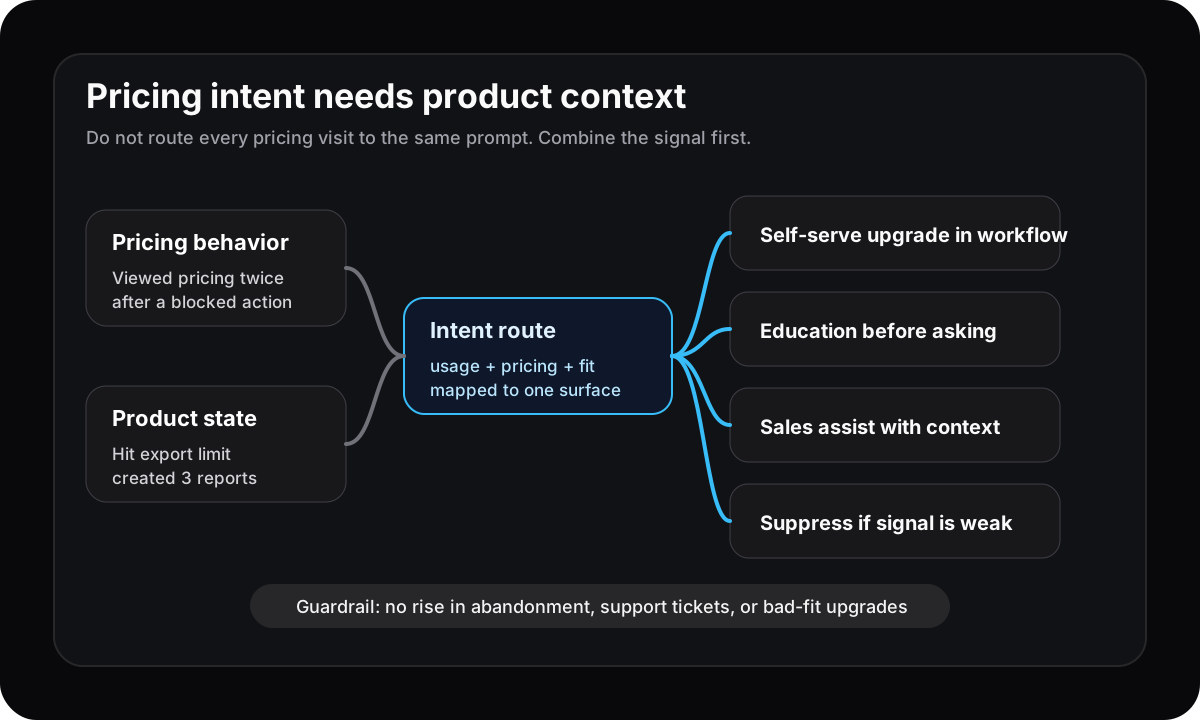
Pricing intent gets safer when it is paired with product state before the UI changes.
Pricing intent is one signal, not the whole decision
Demandbase’s guide to intent signals lists repeated product or pricing-page visits as a common first-party buying signal. That is true. Someone checking pricing is doing something more meaningful than reading a generic blog post.
But pricing visits can mean different things:
- a power user is ready to upgrade
- a founder is checking whether the tool fits budget
- an admin is comparing limits before inviting teammates
- a confused trial user clicked pricing because the product did not explain the locked feature
Those users should not all get the same prompt.
Connect pricing behavior to product state
OpenView’s PQL guide defines product qualified leads as users or accounts showing buying intent through actual product usage. It also includes pricing-page views without buying as one CTA response signal. The important part is the combination. Pricing interest plus product behavior is stronger than pricing interest alone.
A practical pricing-intent row looks like this:
| Field | Example |
|---|---|
| Product state | Created three reports and hit export limit twice |
| Pricing behavior | Viewed pricing twice in 24 hours |
| Account fit | Company domain, five invited teammates |
| Surface | Export modal and report-sharing page |
| Response | Explain the team plan inside the blocked workflow |
| Guardrail | No rise in export abandonment or support tickets |
Now the team has a route, not a guess.
Pick the response by intent shape
Mixpanel’s product-led growth guide ties PLG to behavioral signals like activation, product qualified leads, conversion, retention, and expansion. Appcues makes the same operating point in its PLG metrics guide: teams need metrics that connect product behavior to revenue outcomes, not vanity activity.
That is why the response should depend on the shape of the intent.
| Intent shape | Better product response |
|---|---|
| Hit a real limit after repeated value | Show a self-serve upgrade path in that workflow |
| Looked at pricing before reaching value | Show education or a template before asking for money |
| High-fit account with many users active | Offer sales assist with product context |
| Pricing visit with weak product usage | Do nothing yet, or suppress prompts |
The last row matters. Not every pricing visit deserves action. Sometimes the best response is restraint.
How this differs from a PQL score
A PQL score tells the team an account is worth attention. A pricing-intent route decides what the product should do at a specific moment.
Those are related, but not the same.
A score might say, “this account is warm.” A route says, “when this admin returns from pricing to the export modal, show this plan explanation, then measure upgrade completion and export abandonment for seven days.”
That sentence is less impressive than a dashboard. It is also more useful.
Where Rayform fits
Rayform sits between behavioral telemetry and approved product responses. Your analytics stack can detect the pricing visit, usage limit, account shape, and current surface. Rayform’s job is to help the product react to that pattern at runtime without turning every signal into a sprint.
The rule should stay small. One cohort. One surface. One response. One guardrail.
If pricing intent only creates a CRM task, the product stays silent when the user is deciding. If it only creates a modal, the product gets annoying. The better version is narrower: use pricing behavior as one note in the signal, then let product state decide what happens next.
Related reading: PQLs should trigger product changes and behavior-triggered upgrade prompts beat time-based nudges.